
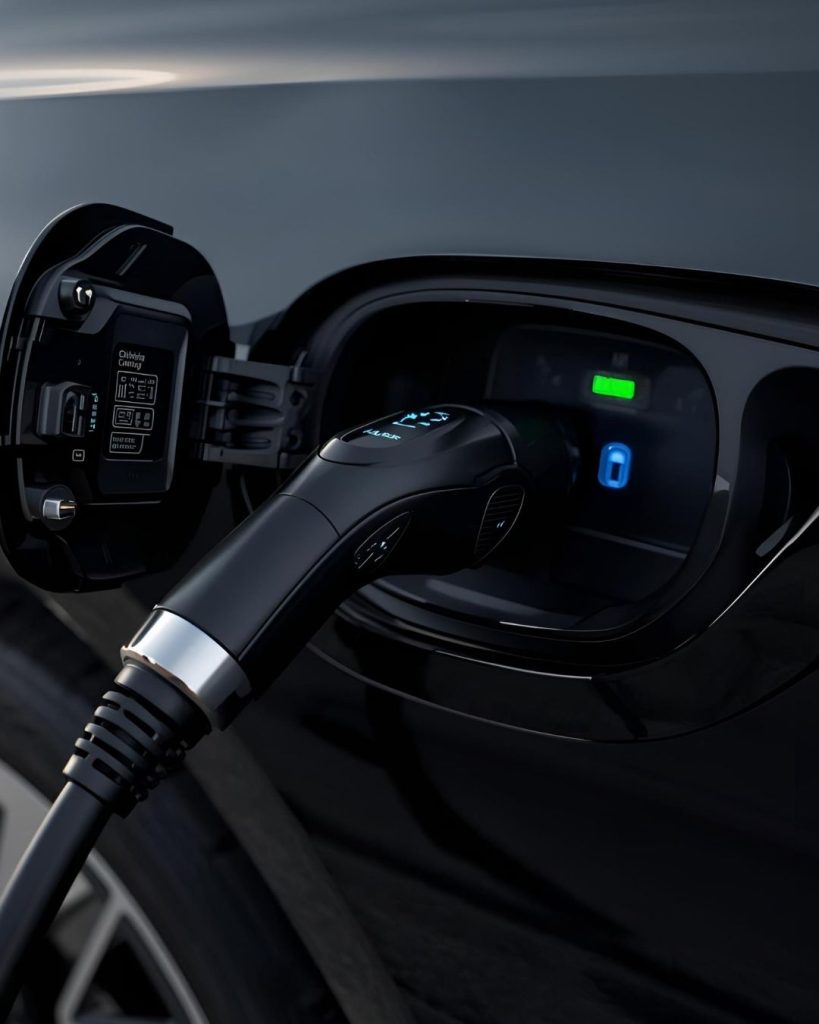
How Much Does an EV Charger Installation Cost in Chelmsford?
Home EV charger installations have become one of the most consistently requested electrical jobs across Chelmsford and the surrounding mid-Essex area — and the volume of enquiries shows no sign of slowing. As the shift to electric vehicles accelerates, the question of where and how to charge at home has moved from a niche consideration to a practical priority for a growing proportion of local households.
Chelmsford has a housing mix that lends itself well to home charging in many cases. The detached and semi-detached properties across Great Baddow, Writtle, Broomfield and the Chelmer Village corridor typically have off-street parking and in many cases garages that make charger installation relatively straightforward. Properties in the newer developments around Beaulieu Park and the Springfield corridor often have wider driveways and more accessible consumer units that suit a clean, uncomplicated installation. The older terraced housing closer to the city centre and along the Moulsham Street corridor is more varied — some properties have driveways, others rely on street parking, and the absence of off-street parking is the single most significant constraint on home EV charging.
This post covers what a home EV charger installation costs in Chelmsford, what type of charger is right for most households, and what affects the final price.
What Does an EV Charger Installation Cost in Chelmsford?
For a standard home EV charger installation — a 7kW smart charger fitted at a property with off-street parking and a modern consumer unit — the installed cost in Chelmsford currently runs:
- Straightforward installation (short cable run, modern consumer unit): £780–£1,100
- Standard installation (average cable run, minor consumer unit work): £1,000–£1,550
- More involved installation (long cable run, older consumer unit, detached garage): £1,400–£2,300+
These prices include the charger unit, all cabling, any necessary consumer unit work, the mounting bracket, weatherproofing where required, testing and certification. A full consumer unit replacement — if that is needed as a separate job — is typically quoted separately and adds £450–£700 to the overall cost.
Chelmsford sits broadly in line with the wider Essex and South East market for electrical labour — above the national average but below Central London. For CM1, CM2 and CM3 postcodes and the surrounding area, the figures above represent realistic current pricing from a registered local electrician.
What Type of Charger Do You Need?
Slow Charging — 3kW
A standard three-pin domestic socket delivers around 3kW — adding roughly 10 to 15 miles of range per hour. For a driver covering 30 to 40 miles a day, this requires 8 to 10 hours of overnight charging to recover a meaningful level of depletion. It is slow, it puts continuous load on a socket not designed for sustained high-current use, and most vehicle manufacturers advise against relying on it as a primary charging method. For occasional top-ups it is workable. As a daily charging solution for most Chelmsford households it is not.
Fast Charging — 7kW
A 7kW wall-mounted charger is the standard solution for home installation and the right answer for the overwhelming majority of Chelmsford homeowners. At this rate, a typical EV adds 25 to 30 miles of range per hour — meaning most vehicles can be fully charged overnight from typical daily depletion without any scheduling complexity.
A 7kW charger requires a dedicated circuit from the consumer unit, installation by a registered electrician, and notification to the Distribution Network Operator. Since December 2022, all newly installed home EV chargers must also be smart-capable — able to connect to the home wifi network and communicate with the grid. A smart charger allows charging to be scheduled to run during off-peak tariff hours, significantly reducing the cost per charge for homeowners on EV-friendly electricity tariffs.
Rapid Charging — 22kW
A 22kW three-phase charger adds range considerably faster but requires a three-phase electricity supply, which most domestic properties in Chelmsford do not have. Single-phase supply — which covers the vast majority of Chelmsford homes — limits the maximum output to 7kW without significant infrastructure upgrade. For most local homeowners, 7kW is both the practical ceiling and the appropriate solution.
What Affects the Installation Cost?
Cable Run Length
The distance between the consumer unit and the charger position is one of the most significant variables in the installation cost. A charger mounted on the wall of an integral garage immediately adjacent to the consumer unit involves a short cable run and minimal disruption. A charger at the far end of a detached garage, mounted on an external wall at the opposite end of the house, or serving a parking space at the bottom of a long driveway requires a longer cable run that adds both materials and labour to the job.
For properties across Chelmer Village, Beaulieu Park and the newer detached housing east of the city where garages are often separate structures set back from the house, the cable run is worth discussing at the quoting stage so the route is planned before work starts rather than improvised on the day.
Consumer Unit Capacity and Condition
Adding an EV charger circuit requires a spare way in the consumer unit. Most modern boards have adequate capacity. Older units — particularly rewireable fuse boards or early RCD boards still found in some of Chelmsford’s older housing stock — may not have a suitable spare way, or may not be safe to connect a new high-current circuit to without upgrading the board first. An electrician who assesses the consumer unit before quoting will identify this in advance rather than discovering it on the day.
Off-Street Parking
A home EV charger can only be installed where there is off-street parking adjacent to the property. Without a driveway, garage or dedicated parking space, there is no safe way to run a cable from the charger to the vehicle. For terraced properties in the older parts of Chelmsford and along the Moulsham Street and Navigation Road corridors where street parking is the norm, a home charger is not currently a practical option. Chelmsford City Council has been expanding public charging provision across the city, and on-street charge points are increasingly available in areas where home charging is not feasible.
Groundwork and Cable Routing
Where the cable needs to cross a garden, a path or a driveway to reach the charger position, it either needs to be buried at the correct depth — 450mm under soft landscaping, 600mm under driveways — or routed in surface trunking. Groundwork for a buried cable run adds cost depending on the distance and the surface that needs to be lifted and reinstated. This is worth factoring into the budget for any installation where the charger is not immediately adjacent to the point of entry.
Charger Brand and Specification
The charger unit itself accounts for a portion of the overall installation cost. The most commonly installed brands in the Chelmsford area — Ohme, Hypervolt, Myenergi Zappi, Pod Point and Easee — range in price from around £300 to £700 for the unit alone, with differences in smart features, app quality, tariff integration and aesthetic finish between them.
The Myenergi Zappi is worth highlighting specifically for properties across Chelmsford and the surrounding villages that already have solar PV installed. The Zappi can be configured to prioritise charging from solar generation rather than drawing from the grid — a meaningful running cost saving for homeowners with south-facing roof space and existing panels. Newer developments across Beaulieu Park and the Springfield Road corridor where solar PV is increasingly common make this a relevant consideration for a growing number of local homeowners.
Is There a Grant Available?
The government’s EV chargepoint grant — previously available to all homeowners — was restructured in 2022 and now applies primarily to flat owners and renters rather than homeowners in houses. As of early 2026, the grant provides up to £350 towards installation costs for eligible applicants. If you live in a flat or are a tenant, it is worth checking current eligibility with your electrician or directly with the Office for Zero Emission Vehicles before booking the installation.
For homeowners in houses, the grant is not currently available under the standard scheme, though eligibility has changed more than once and it is worth confirming the current position at the time you are arranging the installation.
Does the Installation Need Building Regulations Approval?
Yes. A home EV charger installation is notifiable work under Part P of the Building Regulations and must be carried out by a registered competent person — an electrician registered with NICEIC, NAPIT, ELECSA or an equivalent scheme. A scheme-registered electrician self-certifies the work, issues an Electrical Installation Certificate and notifies building control on your behalf. The certificate is a document you will need when you sell the property.
The installation must also comply with the Electric Vehicles (Smart Charge Points) Regulations 2021 — which require all new home chargers to be smart-capable and able to communicate with the grid. An installer offering a non-smart charger is not meeting the current legal requirements.
Getting an EV Charger Installed in Chelmsford
If you are based in Chelmsford, Great Baddow, Writtle, Broomfield, Danbury, Witham or anywhere across mid-Essex, we are happy to come out and assess your property, advise on the best charger position and cable route, and give you a clear fixed price for the installation. Get in touch to arrange a visit.